The system is processing. Please wait a moment!








How to Differentiate Screen Resolutions
WHAT IS SCREEN RESOLUTION?
Screen resolution is the number of pixels in each dimension that can be displayed. It is often quoted as Width x Height in pixels. For example, a screen with HD resolution (1280x720) means that the screen has 1280 horizontal rows and 720 vertical columns containing pixels. Therefore, there are approximately 1280 × 720 = 921,600 pixels on the screen.
People often simply think that the higher the screen resolution, the more detailed the image displayed. In reality, this depends on many factors such as screen technology, pixel size, and screen size…
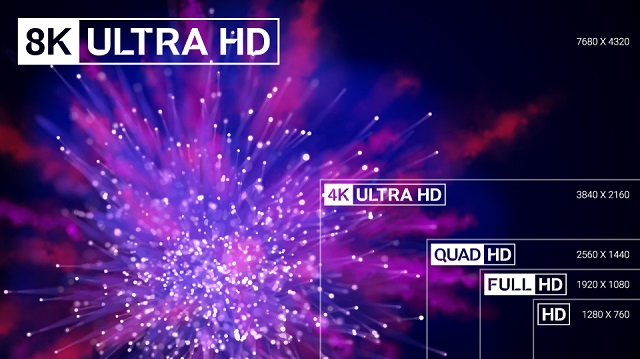
SCREEN RESOLUTION STANDARDS
1. Low resolution
Early laptops and phones had extremely poor resolutions, with resolution standards such as:
- QQVGA: has a resolution of 120 x 160 pixels or 160 x 120 pixels. This resolution is used for button-operated phones such as the BQ-2412 Quattro, Nokia 230 Dual Sim, BQ-3201, etc. The display is not as sharp or visually appealing as other models due to its very low resolution.
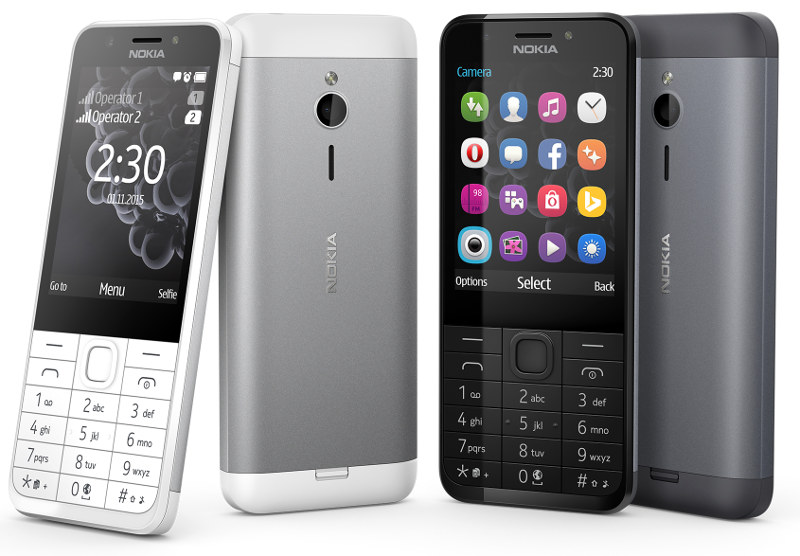
- QVGA: has a resolution of approximately 320 x 240 pixels. This resolution is used on inexpensive feature phones such as the MOBELL M228, Nokia 150, etc.
- VGA: Has a screen resolution of 640 x 480 pixels with a 4:3 aspect ratio (width x height). Previously, 640 x 480 pixels was the standard resolution for devices. However, with the rapid development of technology, VGA is gradually becoming less popular and widely used.
- WVGA: has a resolution of 768 x 480 pixels. WGA is currently used in inexpensive smartphones on the market.
- 720 x 480 pixels with a 3:2 aspect ratio.
- 800 x 480 pixels with a 5:3 aspect ratio.
- FWVGA: a resolution of 854 x 480 pixels with a 16:9 aspect ratio, commonly used in budget smartphones.

- SVGA: has a total of 480,000 pixels (800 x 600 pixels) with an aspect ratio of 4:3.
- DVGA: has a resolution of 960 x 640 pixels with a 3:2 aspect ratio, used in the screens of iPhone 4, iPhone 4s, etc., or Samsung Galaxy J2 Prime, J2 Core, or J2 Pro phones released in 2018. You will encounter the qHD standard with a size of 960x540 pixels, which is 1/4 of the HD standard.
2. High resolution
Nowadays, with the development of technology, devices with the aforementioned low-standard screens are becoming less and less used. Instead, devices with high-quality screens such as HD, Full HD, 2K, or 4K are becoming increasingly popular.
- HD and HD Plus: HD resolution has a width of 1280 pixels and a height of 720 pixels, with a refresh rate of 60 frames per second. The pixel density is 921,600 pixels per frame. The sharpness is three times greater than the old VGA standard. It is commonly used as the video and display standard for Samsung phones.
HD+ resolution is an upgrade from HD, offering higher resolution and extremely high pixel density.
- 1440 x 720 pixels, 16:9 aspect ratio
- 1480 x 720 pixels, 16:9 aspect ratio
- 1520 x 720 pixels, 16:9 aspect ratio
Full-screen support with 18:9 and 18:5:9 aspect ratios has been implemented in mid-range screens and smartphones from 2018 to the present.
.jpg "resolution")
- Full HD and Full HD Plus: have a horizontal resolution of 1920 pixels and a vertical resolution of 1080 pixels, with an aspect ratio of 16:9. They are commonly used in video standards with a refresh rate of 60 frames per second.
Full HD screens are also used in smartphones, curved screens, and bezel-less screens with 18:9 and 19:9 aspect ratios, and are gradually being replaced by Full HD Plus screens. So what is Full HD Plus?
- Full HD Plus, also known as Full HD+ or FHD+, is an upgraded version of Full HD. The screen has a height of 1080 pixels, but a larger width as follows:
- 2,160 x 1,080 pixels
- 2,280 x 1,080 pixels
- 2,340 x 1,080 pixels
However, Full HD plus resolution is gradually losing popularity in the current market.
- 2K and 2K+: Also known as Quad HD or QHD, this standard screen has a resolution of 2560 x 1440 pixels. This technology gives smartphones a sophisticated, sharp, and captivating display, making images appear more realistic and have greater depth. With a resolution many times higher than Full HD , some argue that while 2K is higher than Full HD, it's somewhat overkill for a standard screen. However, in high-end smartphones equipped with these advanced panels and technologies, users will experience an incredibly sharp and captivating display, far superior to HD resolution.
- 4K: This is the Ultra HD or UHD standard, equivalent to 3840 x 2160 pixels or 4096 x 2160 pixels, four times the resolution of Full HD. The 4K standard is not yet common in smartphones and is mainly integrated into high-end TV screens. Not stopping at 4K, other standards are currently being developed, such as 4K+ (UHD+) with a resolution of 5120 x 2880 pixels and the 8K (FUHD) standard with a resolution of 7680 x 4320 pixels.
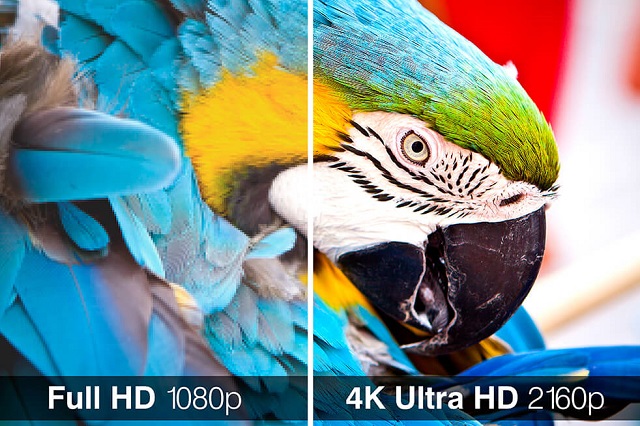
In summary: Screen resolution significantly impacts the display quality of devices. For the same screen area, higher resolution results in sharper and more realistic images. Furthermore, we shouldn't completely disregard the importance of resolution; it's consistently one of the most important parameters to consider when buying equipment or working with images.
Through this article, HSV Media hopes to provide you with useful information about screen resolution and help you choose the resolution that best suits your needs. For more details or any questions, please contact our hotline: 0978.672.682
HSV Media is a reputable and affordable LED screen and event equipment rental company in Ho Chi Minh City , always ready to serve you.